Leda Hits Her Daughter and Shatters the Glass Door
The Lost DaughterLeda Hits Her Daughter and Shatters the Glass Door is a remembered episode in which an ordinary interruption to Leda’s work becomes a frightening rupture in her relationship with Bianca. The incident begins while Leda is absorbed in an unfinished academic essay and escalates from a slap to repeated blows, a forceful removal from the room, and a shattered glass pane. Leda recalls the child unharmed but herself alarmed by how far her anger carried her; the memory resurfaces amid her distress at a crowded market, joining a past loss of control to her present physical unease.
Background and Pressures
The episode takes place one winter afternoon in the kitchen. Leda has been working for months on a short essay that she cannot complete. Its arguments will not come together, and the multiplication of possible hypotheses intensifies her fear that the professor who encouraged her to write it will not help publish it or will reject it. The essay is therefore more than a task left unfinished: it is bound up with Leda’s hopes for intellectual work and recognition at a time when she feels unable to test her abilities.
Elsewhere in her recollection, Leda describes feeling that youthful hopes had been damaged, while ambition remained alive but constrained by the realities of university dealings and the need to pursue career opportunities. She feels cut off from creative work and frustrated by the difficulty of securing a future for it. These pressures form the immediate context for the kitchen scene, though the narration does not present them as an excuse for what she does. Instead, it places her concentrated attention and professional anxiety beside the demands of caring for her children, showing how a small interruption meets a mind already strained by work and time.
The Kitchen Incident
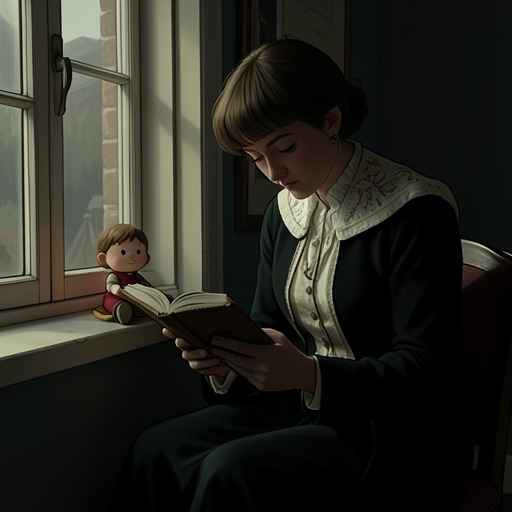
Marta is playing beneath the table at Leda’s feet. Bianca, five years old, sits beside Leda and imitates her gestures and frowns, appearing to pretend to read and write. Leda cannot say exactly what leads to the first blow: perhaps Bianca has spoken without receiving an answer, or perhaps she is trying to begin one of her rough games. As Leda searches for words for her essay, Bianca suddenly slaps her ear. Leda describes the blow as not hard enough to cause serious harm, but says that it startles her and interrupts thoughts already difficult to hold together.
Leda responds immediately by hitting Bianca. At first the contact is slight; she tells herself she is correcting the child, while Bianca smiles and tries to hit her again, apparently taking the exchange for a game. Leda then strikes her harder and continues, repeating the action as Bianca’s laughter gives way to bewilderment. When Bianca understands that Leda is not playing, she begins to cry. The change in the child’s response marks the moment when the apparent game becomes unmistakably distressing, but it does not stop Leda at once.
Leda recognizes that she is still hitting Bianca even as she feels the child’s tears. She characterizes her own actions as controlled in gesture but decisive, and identifies them as real violence rather than discipline. The intervals between the blows grow shorter. She then takes Bianca by the arm, moves her into the hall, and leaves her there, shutting the kitchen door firmly. Leda’s stated need to work remains part of the scene, but by this point the conflict has moved beyond the interruption that began it: she excludes her daughter from the room and says she does not want to see her.
The Door and Immediate Aftermath
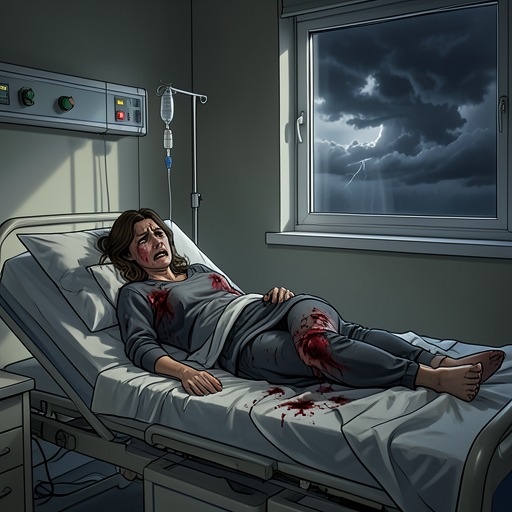
The door has a large pane of frosted glass. Leda does not know exactly how it happens; she thinks she may have pushed the door with too much force. It bangs shut, and the glass breaks. Beyond the now-empty rectangle, Bianca appears wide-eyed and still. She is unharmed, and her tears continue silently. The broken pane gives the outburst a visible consequence, while Bianca’s silence replaces the earlier crying and laughter with a moment Leda remembers as frightening.
Leda is alarmed by what she has done and by the possibility of how far she might go. Her recollection includes Marta pulling at her skirt as well as Bianca standing in the hall among the broken glass. Rather than treating the episode as an isolated act of correction, Leda frames it as evidence that her controlled manner did not prevent genuine violence. The children’s presence—Marta beside her and Bianca directly before her—makes the memory inseparable from the family scene in which her loss of control occurred.
Return of the Memory
Leda says that she tries not to think about the moment, yet it returns while she is taking shelter from renewed rain in the building that houses the market. The crowded, enclosed space, its strong food odors, heat, dampness, and shifting cool air leave her feeling sick and unsteady. She settles near the entrance to feel the air from outside and attempts to regain control. In that present setting, the memory of the kitchen returns alongside her physical distress: she is sweating, struggling to breathe comfortably, and unable to calm her pounding heart.
The episode is not recalled as a neatly ordered story. Leda says that these alarming events have no stable before and after in her mind and return in a different order each time. The market scene thus does not simply introduce a past incident; it shows the incident intruding into the present, where Leda’s effort to steady herself echoes her fear of the person she became in the kitchen. The shattered pane and the silent child remain the concrete center of that fear: Bianca was not injured, but Leda cannot forget the instant when she recognized the reach of her own anger.